

Nostalgic Branding | Your Kid Doesn’t Remember It. So Why Does It Feel So Familiar?
A few weeks ago I was helping my son get new tires for his car. When we went to pick it up, he said, Mom, I want to show you something. He opened the center console and pulled out a stack of CDs.
Tool. Perfect Circle. Bands that were big in the '90s and early 2000s. Music from before he was born.
I asked him why. Why that music? Why those bands?
He said, "I don't know why. It's just my preference."
He genuinely couldn't explain it. He just knew it felt like his.
That fascinated me. Because real nostalgia is supposed to be about memory. About lived experience. But my son has no memory of this music. He wasn't there. He never went to those concerts. He never watched them on MTV.
So what is that feeling, exactly? And what might it tell us about nostalgic branding?
Nostalgia Has Measurable Value. More Than You'd Think.
Nostalgia tends to get treated like a soft, sentimental thing. A throwback vibe. But researchers have actually studied it as a form of value. Measurable, documented value.
Bain & Company, a global management consulting firm, published a framework called the Elements of Value. It maps thirty distinct things that consumers actually pay for, the things that drive loyalty and pricing power. Nostalgia is on that list.
But here's what's interesting about where it lives. Nostalgia sits in the Emotional tier. Not Functional. That's where price, quality, and convenience live. One full tier above that.
Bain found that brands delivering emotional value see returns about 50% higher than brands competing purely on functional ground.
Which means every small business pouring energy into being cheaper, faster, or more convenient is competing on the lower floor. Nostalgia is playing an entirely different game upstairs.
Something Is Happening Right Now
A research firm called Mintel first noticed it during the 2008 recession: nostalgia spiked. People reached backward when the present felt hard. They've tracked that same pattern through every period of economic stress since.
Which might explain why, as of last year, nearly two thirds of American adults said they'd felt nostalgic in just the previous week.
But here's the part that surprised me most when I started digging.
Gen Z is the generation driving the nostalgia wave hardest right now, and they're nostalgic for things they never experienced. 37% of Gen Z feel nostalgic for the 1990s despite many of them not having been born then. 80% report nostalgic feelings for historical periods they didn't live through.
Which sounds strange. Until my son explained it to me.
He said, "before the internet, when you missed a generation, you just completely missed it." That era lived inside the people who experienced it, inside their heads. But the internet changed that. Now every era is visible. Every decade is accessible to any generation, through TikTok, YouTube, Instagram, memes.
Nostalgia used to live inside the heads of the people who experienced it. Now it’s available to everyone.
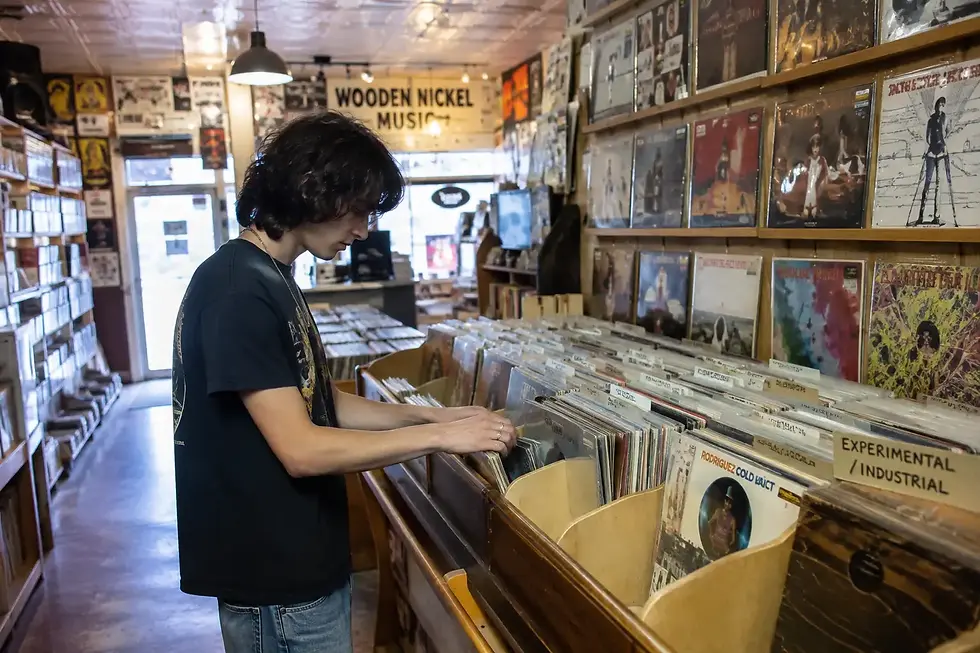
And the behavior backs it up. Vinyl sales in the US crossed a billion dollars in 2025 for the first time since the year 2000. That's 19 consecutive years of growth, driven primarily by people under 25. Film cameras. Print magazines. Physical books. There may be another reason physical things are becoming more appealing in a digital world: physical objects can also give our memories something tangible to attach to. The generation that has never known a world without streaming is leading the charge back to analog.
The Science Behind Why It Loosens Your Grip on Money
Nostalgia doesn't operate at the level of conscious reasoning. Nobody chooses to feel it. Researchers have found that it activates the brain's reward circuits, the same dopamine-rich regions that fire when something genuinely delights you.
But here's something fascinating.
A study published in the Journal of Consumer Research tested nostalgia's effect on spending in multiple ways. In one experiment, people who were feeling nostalgic were willing to give more money to others, but not more time. Just money.
Nostalgia doesn’t make people more generous across the board. It loosens their grip on spending in particular.
But oddly enough, the mechanism runs through connection. Things trigger nostalgia all the time: a song, a smell, a CD found at a thrift store. But when researchers looked at what people actually feel when nostalgia hits, the memory underneath almost always has people in it. Someone they loved. A moment of feeling cared for. Even when the trigger is an object, the warmth is relational.
That's why nostalgia generates social connectedness. Of belonging. Of not being alone. And when people feel genuinely connected, the psychological need for money as a substitute for that connection decreases.
When the world feels unstable, the brain goes looking for connection and belonging. Which is part of why nostalgia is surging the way it is.
There’s a Name for What Gen Z Is Experiencing
During the interview I did with my son for the video that goes with this piece, some interesting insights surfaced.
I was wrapping up, asking if I'd missed anything. While he was thinking, I started absentmindedly humming the Jeopardy theme. We both laughed. And then he said,
"that's nostalgia, but for our generation it's more because that was a meme."
I pushed back… "but in order for your meme to exist, it had to happen in real life. And that was my generation."
Same tune. Same recognition. Completely different origin of the feeling.
It turns out there's a name for what he was experiencing. Researchers who study nostalgia identify different types. The most familiar is personal nostalgia, which is lived memory. Your own experience. Direct. Immediate. The most emotionally potent kind.
And then there's something else. A writer named John Koenig coined the term anemoia, which means nostalgia for a time you never experienced. Longing for a past that was never yours.

That's my son in the car with his CD collection. He didn't live through the '90s. He encountered it through the internet, through algorithms surfacing an era he was never part of. And somehow he feels nostalgic for it.
Before the internet, when you missed a generation, you just completely missed it. That era lived inside the people who experienced it and wasn't accessible to anyone else. Now every era is accessible to everyone simultaneously. That's what makes anemoia possible at scale.
Are we getting to the point where we’ll be nostalgic for nostalgia itself? For the version that actually required you to have been there?
There's something that feels worth preserving in the kind of memory that only one generation carries. The things I can try to explain to my kids, though they'll never quite get the same way. Some experiences belong only to me. And yet the feeling those experiences produced doesn't seem to require that history to exist in someone else.
Which is either a beautiful thing or a slightly unsettling one, depending on how you look at it.
What Nostalgic Branding Means for Brands
If 80% of Gen Z can feel genuinely nostalgic for eras they didn't live through, then a brand founded five years ago can carry the emotional texture of a tradition it never existed in.
If the connection is real, not trend-chasing, but genuinely rooted in something the brand actually cares about. If it's specific enough that it couldn't belong to just any brand. And if it's earned through how the brand shows up consistently, not just borrowed for a campaign.
This is where brand strategy becomes important, because the question isn't simply whether nostalgia looks right for a brand. It's whether it actually belongs there. Not sure what actually belongs to your brand? The Brand Explorer Workshops help you uncover the values, personality, point of view, and experiences that give your brand its foundation.

There's a sunscreen brand called Vacation, founded in 2021 by three co-founders who were born in the '80s, though just barely. They don't claim to remember the era. But they do claim to have spent their adult lives genuinely drawn to it: the aesthetic, the leisure culture, the feeling of it.
The whole brand lives inside a fictional 1980s Miami resort world. Every detail is committed to this: the photography, the typography, the campaigns. Their creative is so accurate to the era it's barely distinguishable from real '80s advertisements. Down to the fonts.
What makes it work isn’t just the visual accuracy. It’s the brand’s unapologetic absurdity. The excess, the ridiculousness of the decade, the big hair. None of it is a joke, even though it could be. And none of it comes from the founders’ actual lived experience. Yet all of it feels intentional and completely true to the brand.
Because the feeling they're expressing is real, even if the history isn't theirs.
It’s worth noting what co-founder Lach Hall has said about this directly. They weren’t "chasing a trend" with Vacation. They were putting out something true and honest to who they already were. The brand didn’t come first. The world they lived in came first, and the brand was finally a way to give it form. That sequence matters. When nostalgia is the starting point of a brand rather than a layer added later, people can feel the difference.

When Nostalgic Branding Falls Flat: Nostalgia-Washing
A term started circulating in 2024, nostalgia-washing, drawn as a parallel to greenwashing. It describes something a lot of brands got caught doing.
In 2024, Coke, Dunkin', and Bumble Bee all ran campaigns reuniting members of '90s and early 2000s boy bands. Same playbook. Same cultural moment. Different brands.
And it landed flat. Because there's a difference between a brand intentionally built around an era because it genuinely carries meaning, and one that's just borrowing the aesthetic because it's trending.
With Vacation Sunscreen, the '80s leisure culture feels directly tied to what they're actually selling. The absurdity and humor make total sense. But tuna, coffee, and soda paired with '90s boy bands. Where's the connection?
Those campaigns feel like temporary moments of entertainment. Brands chasing a trend. And you can feel that. It reads less like brand identity and more like a marketing tactic.
If you're a small brand, the people you're trying to reach will know the difference. They'll probably say so.
This is also where brand clarity gives a small business a useful filter. When you're clear on your values, personality, point of view, and the experiences that shaped the business, it's easier to tell the difference between an idea that genuinely belongs to your brand and one you're borrowing because it's popular.
There’s an observation worth sitting with here. What makes one person nostalgic can make another person feel out of the loop. Getting the cultural reference wrong doesn’t just fail to connect. It signals that you don’t actually know your audience. For a large brand that can absorb the cost of a misfired campaign, that’s an awkward quarter. For a small brand whose entire relationship with its audience is built on trust and specificity, it’s a much bigger problem.
When nostalgia works in a brand, it’s not about the decade or the aesthetic. It works because it creates a real moment of connection, a connection to an emotional memory that was already there.
The Feeling Is What's Real
Now, back to my son in the car. A stack of CDs. Music from before he was born. He can't explain why he's drawn to it. Maybe that's the most honest thing about nostalgia now. It doesn't ask permission from a specific generation. It doesn't require you to have been there. It just needs to find a feeling that already exists.
And it doesn’t matter where that feeling came from. The emotion is still real.
That’s something worth sitting with, not as a checklist or a strategy, but as a genuine question. What feeling is your brand actually carrying? Not the feeling you want people to have, but the one that was already there before you started building. The one that shaped why you started in the first place. Because if that feeling is real, and if the people you’re trying to reach are already walking around with some version of it, nostalgia might not be a tactic at all. It might just be recognition.
Which might be worth sitting with if you're thinking about nostalgic branding. Not which era your brand could borrow from, but what feeling you're genuinely carrying, and whether the people you want to reach are already walking around with some version of it.
FAQ
What is nostalgic branding?
Nostalgic branding uses references, experiences, aesthetics, or cultural cues associated with the past to create an emotional connection with an audience. The strongest examples feel connected to the brand's actual personality and story rather than borrowing an era simply because it's popular.
Why does nostalgia work in branding?
Nostalgia can create feelings of familiarity, connection, and belonging. Those emotional associations can make a brand feel more meaningful than one competing primarily on functional benefits such as price or convenience.
Can people feel nostalgic for a time they never experienced?
Yes. The term anemoia describes nostalgia for a time you never personally experienced. Younger generations can develop emotional connections with earlier decades through music, fashion, movies, social media, and other cultural references.
Why is nostalgic branding popular with Gen Z?
Gen Z has unprecedented access to previous decades through digital media. Music, fashion, photography, television, and other cultural artifacts from earlier generations are constantly being rediscovered and reinterpreted, allowing people to develop connections with eras they never lived through.
What is nostalgia-washing?
Nostalgia-washing describes using nostalgic references primarily to capitalize on a trend without a meaningful connection to the brand. It can feel forced when the era, reference, or aesthetic doesn't make sense for the brand, its audience, or what it sells.
. . .
If you're still trying to uncover those deeper parts of your brand (your values, personality, point of view, and the ideas that actually belong to you) my Brand Explorer Workshops are designed to help you work through that foundation before you start deciding how the brand should look or sound.

Comments