

Generation X Consumer Behavior | Why Brands Keep Forgetting Their Best Customers

So apparently, Generation X has been called the forgotten generation. As someone who is very firmly early Gen X, I have always found that pretty amusing. Then I started looking into the research, and the joke got more interesting.
I expected Generation X consumer behavior to come down to a few familiar stereotypes. What began as a rabbit hole about why nobody seems to talk about Gen X led me to some surprising consumer spending data, a handful of generational stereotypes that didn't hold up nearly as well as I expected, and a branding question I wasn't really expecting to ask like… are brands paying attention to the right people? There is a strange gap between the generations getting the most attention and the people actually making buying decisions.
The Forgotten Generation Thing Is Mildly Amusing Until You Look at the Numbers
My first real job in high school was at the Gap. The funny thing is that even with the employee discount, I really didn't want to wear Gap clothes. I was what we would have called "mod" back then. If you know, you know. I bought a lot of my clothes secondhand, knew how to sew well enough to make some of my own, and regularly borrowed things from my dad's closet.
He was in the Coast Guard, so that meant Coast Guard pants with the suspenders hanging down, an oversized light-blue denim button-down shirt buttoned all the way to my neck, a brooch at the collar, chains hanging off it, white lipstick, and hair that was shaved short in the back but long, permed and curly in the front. I basically looked like a poodle. Unfortunately, I was also a very angsty teenager who hated having her picture taken, so photographic evidence of Poodle Krista is limited, but AI produced a pretty convincing version of 16 year old me above.
Lately I have been seeing more jokes, memes and conversations about Gen X being forgotten. People talk about Boomers, jump to Millennials and then Gen Z, while those of us born between roughly 1965 and 1980 are apparently somewhere off having a cigarette behind the school gym. Totally MIA. Because I am Gen X, this got my attention. Because I am me, I started researching it.

How Much Spending Power Does Generation X Have?
In 2025, ICSC, a retail industry organization, published research based on roughly five trillion dollars in retail transactions from 2020 through 2024 across 426 retailers, both online and in stores. I want to be clear about the source because ICSC has an obvious reason to want retailers to pay attention to this group, but the dataset itself is substantial.
How does a group responsible for that much spending become so easy for brands to overlook?
Gen X represents roughly 19 percent of the U.S. population, yet in ICSC's analysis it accounted for about 31 percent of retail spending. Across nearly every category measured, Gen X also had the highest revenue per shopper, meaning the amount spent by the average shopper in that group. That is a relatively small generation creating a very large economic footprint.
At that point I became less interested in the joke about nobody remembering Gen X and more interested in a different question. How does a group responsible for that much spending become so easy for brands to overlook?
Gen X Is Online. They Just don't Feel Particularly Seen.
One explanation you sometimes hear is that Gen X simply isn't as digitally engaged. The data doesn't really support that. Wavemaker, a global media and advertising agency, studied Gen X and social media in 2023 and found that only 13 percent of the Gen X respondents it studied felt represented in the social advertising they saw, while 92 percent said they used social media every day. Its definition of Gen X was roughly ages 45 to 60, so the age boundaries are slightly different from the commonly used 1965 to 1980 definition.
Pew Research Center's 2025 research also found that among adults ages 50 to 64, 85 percent use YouTube and 74 percent use Facebook. So no, Gen X didn't collectively unplug from the internet sometime around 2003. We are right here.
A recognizable brand isn't only one people recognize. The right people should also be able to recognize something of themselves in it.
This is where I started thinking about the issue as a branding problem. Brands work very hard to become recognizable. We want people to recognize the logo, the colors, the tone, the packaging and the message, but there is another kind of recognition happening at the same time... can the person looking at the brand recognize themselves in it?
Do the people in the photos look anything like them? Does the language sound like somebody talking to a person at their stage of life? Does the brand appear to understand what their actual life looks like? When people consistently don't see themselves reflected back, it isn't difficult to understand why an entire group can start to feel as though nobody is really talking to them.
Are Gen X Consumers Really Independent, Skeptical and Self-Reliant?
Once you start reading about Gen X, you run into the same descriptions over and over again: latchkey kids, independent, self-reliant, skeptical, adaptable, accustomed to figuring things out for ourselves. I will admit that quite a bit of that feels familiar to me. I have been self-employed since 1998, and during that time my business, my life and my entire industry have changed repeatedly.
The internet arrived. Social media changed how businesses market. Technology transformed design. Now AI is changing it again. There were recessions in there, a divorce, and more than one reinvention, and my response has usually been some version of "okay, figure it out, adapt and keep going." There is persistence in that. There is also probably a fair amount of stubbornness.
So when I kept reading that Gen X was unusually resilient and self-reliant, part of me thought there might really be something to it. Then I tried to find research showing that Gen X business owners stay in business longer than other generations, and I couldn't find it. What I did find was research showing that older, more experienced founders tend to do better on some measures, but that is an age and experience effect, not proof of a generational personality.
Why Generational Research Gets Messier Than It Sounds
In 2023, Pew Research Center changed the way it approaches generational research. One of the reasons was that so much information being presented as generational research had become closer to marketing mythology or clickbait. Pew began emphasizing comparisons between generations at similar stages of life rather than automatically attributing differences between a 25-year-old and a 55-year-old to the generation they belong to.
The basic problem is surprisingly simple. Three different things get mixed together. Age, the period of history you are currently living through, and generation. If I behave differently at 55 than someone who is 25, is that because I am Gen X, because I am 55, or because the two of us are living through the same economic and technological moment from completely different stages of life? Researchers have a hard time pulling those things apart.
The latchkey story is a good example. A lot of Gen X kids really did spend more time unsupervised, but I couldn't find strong research showing that being a latchkey kid caused Gen X adults to become unusually skeptical or self-reliant consumers. That may be a story we have attached to the generation rather than something we have actually proven, and that distinction matters.
What Are People This Age Actually Doing?
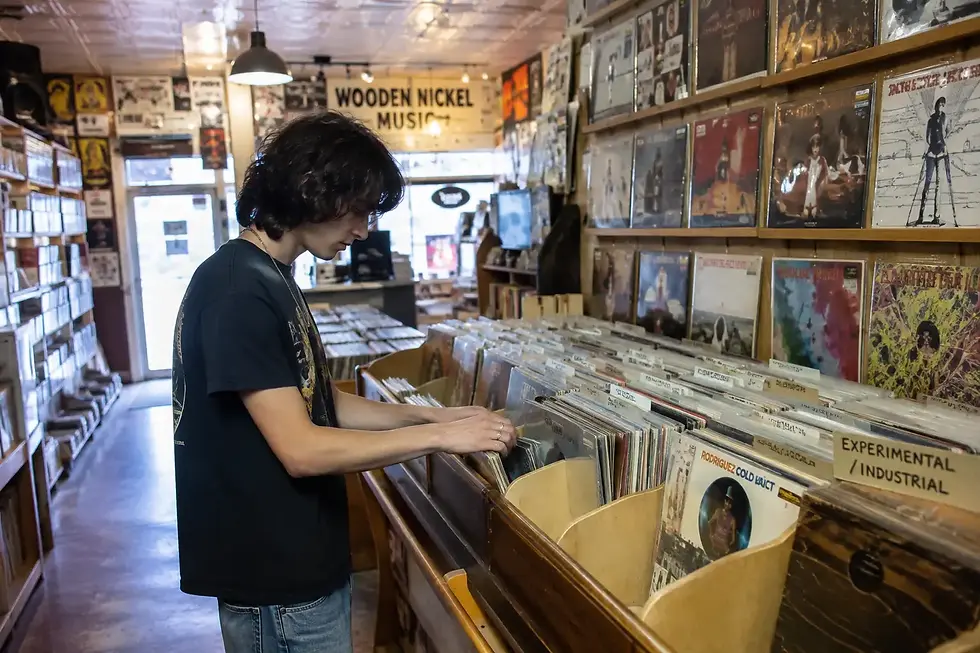
Instead of trying to define a Gen X personality, I became more interested in something more measurable. What are people this age actually doing? This is where my teenage thrifting habit unexpectedly popped back into the story. Buried in the ICSC research was a very specific finding. Gen X's revenue per shopper for in-store secondhand apparel was twice Gen Z's and higher than Millennials'.
Whoa. Apparently I have been preparing for this study since sometime around 1986. I am not suggesting Gen X invented thrifting, because we absolutely didn't, but there is something funny about watching thrifting become closely associated with younger generations while the older generation is apparently standing at the secondhand register spending quite a bit too.
Fitness was another category that stood out. ICSC reported relatively high Gen X spending there as well, but the categories themselves aren't really the important part. The stage of life is.
Gen X Is in a Complicated Stage of Life
Gen X today spans roughly the mid-40s through early 60s, which covers an enormous range of circumstances. Some people are still raising children, some are helping adult children, some are caring for aging parents, and some are doing both. Many are in peak earning years while simultaneously thinking very seriously about retirement, healthcare and what their financial future looks like.
The ICSC survey also found significant caregiving responsibilities among the Gen X respondents it studied, along with concerns about healthcare costs, rising prices and retirement. More than half said caregiving had caused them to reduce discretionary spending. That complicates the idea that Gen X simply has all the money. They may be spending a lot because they are responsible for a lot, and those are two very different things.
That kind of life-stage detail is much more useful to a business than a vague idea that Gen X buys a certain way because we were latchkey kids. Maybe a busy 52-year-old values convenience because she is divorced, juggling work with a kid in college and helping an aging parent. That tells you something useful about the person. "Gen X is independent" doesn't tell you nearly as much.
And Gen X isn't One Person
Someone born in 1965 is around 61 at the time I write this post. Someone born in 1980 is around 46. One person may be preparing to retire while another may still have teenagers living at home. Add income, race, gender, education, geography, family structure and financial circumstances, and suddenly the label 'Gen X consumer' tells you much less than it seemed to.
This is also why I am not going to give you seven things Gen X wants from brands. That would be doing exactly what I think brands need to be more careful about doing: turning an entire generation of people into shorthand.

The Time Gen X Was Literally Forgotten
There is one part of this story that is too good not to mention. In 2019, CBS News aired a graphic explaining generations by birth year. It listed the Silent Generation, Baby Boomers, Millennials and Post-Millennials. Gen X was simply missing. The years from 1965 to 1980 were gone. What? Seriously?
Then in 2022, longtime political analyst David Gergen wrote about Boomers passing leadership to Millennials and Gen Z, skipping Gen X again. At some point you have to appreciate the commitment to the bit.
Gen X Culture Came Back Before Gen X Did
There is another interesting wrinkle in the forgotten-generation story. Gen X culture is everywhere. Younger people are listening to music that came out when I was young, thrifting, wearing vintage clothes and rediscovering the visual language of the 1980s and 1990s. I talked about this in my previous piece about nostalgia and branding, where I looked at why people can become attached to periods they never actually lived through.

One of the brands I looked at was Vacation, a sunscreen company that built an entire brand world around a highly stylized version of 1980s resort and beach culture. The retro 80s packaging, old vacation-advertising energy and over-the-top product ideas are clever and very well executed. Somewhere in researching this Gen X piece, though, I realized there is an interesting distinction hiding in there.
Brands may have rediscovered the culture before they rediscovered the people who actually lived it. The music came back. The fashion came back. The packaging came back. Even the sunscreen came back. Meanwhile, the 55-year-old who actually remembers all of it may still not recognize herself in much of the advertising she sees.
Borrowing the look of a generation and understanding the people who lived through it are two different things.
Are Brands Starting to Pay More Attention to Gen X?
There are signs that this may be changing. CoverGirl is one recent example. Coty, the company that owns CoverGirl, has talked publicly about reconnecting the brand with consumers in the Gen X age range after an attempt to push the brand younger didn't connect as intended. Recent CoverGirl work has included models in their 40s and 50s and a more deliberate effort to speak to women at that stage of life.
Of course, this is brand strategy. Coty is trying to grow a brand, not perform a public service. But that is exactly why the example is interesting. A company looked at the people it was trying to reach and reconsidered whether it had been paying attention to the right customer.
What Gen X Can Teach Small Businesses About Knowing Their Audience
I thought I was researching a story about Generation X. I ended up thinking much more about how brands decide who matters. We tend to pay attention to the people making the biggest racket, the generation getting the think pieces, the group dominating a platform, or the customers everyone else seems interested in. From there, that shorthand starts forming... Gen Z wants this, Millennials care about that, older customers don't use technology, people over 50 don't care about branding.
Those assumptions can survive for a surprisingly long time when nobody bothers to look at the real people behind them. Gen X is simply a useful example. The bigger branding question is who your business might be overlooking because you are paying attention to who is most visible instead of who is actually meaningful to you.
This is where small businesses have an advantage. A giant consumer brand often has to work from research, segments and averages. A small business can actually know its customers, sometimes by name. You can talk to them, ask questions, notice patterns, see who keeps coming back and understand what is changing in their lives.
That is also why brand clarity matters. The clearer you are about the real people you serve, the less you need demographic shorthand to tell you how your brand should sound, look or behave.
Who might your business be overlooking because you are paying attention to who is most visible instead of who is actually meaningful to you?
. . .
FAQ
Why is Generation X called the forgotten generation?
Generation X is sometimes called the forgotten generation because it is smaller than the Baby Boomer and Millennial generations surrounding it and has often received less cultural and marketing attention. There have even been visible examples of Gen X being omitted from generational discussions and media graphics altogether.
What years are Generation X?
Generation X is commonly defined as people born from 1965 through 1980, although some research organizations use slightly different age ranges. That matters when comparing Gen X statistics because different studies may not be describing exactly the same group.
How much spending power does Gen X have?
Research published by ICSC found that Gen X represented roughly 19 percent of the U.S. population but accounted for approximately 31 percent of the retail spending in the transaction data it analyzed. The same research found high revenue per shopper across many retail categories. Because ICSC is a retail industry organization, those findings are useful but should be considered with that source context in mind.
Is Gen X active on social media?
Yes. Gen X is active online, particularly on platforms such as YouTube and Facebook. Pew Research Center reported in 2025 that 85 percent of adults ages 50 to 64 use YouTube and 74 percent use Facebook, while Wavemaker also reported high daily social-media use among the Gen X consumers included in its research.
How should brands market to Generation X?
Start by understanding the actual people your business serves rather than relying on broad generational stereotypes. Life stage, responsibilities, income, values, needs and buying context may be more useful than assuming all Gen X consumers behave alike. The larger lesson is to build messaging and brand expression around real customer behavior rather than demographic shorthand.
. . .
Know Who You're Actually Talking To. One of the easiest things to do in branding is build a picture of your customer from assumptions. The harder and much more useful work is getting close enough to understand the real person. What matters to them, what they are trying to solve, what they notice, what they ignore, and what makes them feel like a business actually understands them.
That is part of the work behind my Brand Explorer Workshops. They are designed to help small business owners work through the questions behind who they are, what they do, who they help and why it matters, so the brand is built from something more useful than assumptions.


Comments